 Save to Pinterest
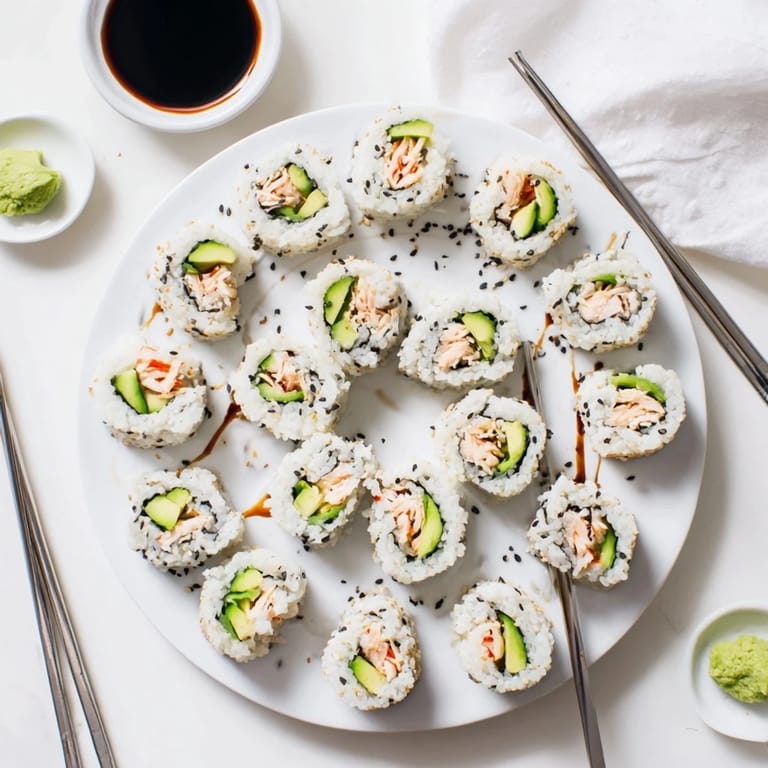
 The first time I attempted homemade sushi, my kitchen looked like a crime scene of rice grains and nori scraps. I had ordered a bamboo mat online and watched about seventeen tutorials, yet nothing prepared me for how intuitive the rolling motion actually feels once you surrender to it. My roommate walked in, took one look at the chaos, and asked if we were having takeout instead. But that first imperfect California roll changed everything—it was messy, but it was mine.
Last summer, I made these for a small dinner party where nobody believed I had actually made the sushi myself. The look on my friend Sarahs face when she bit into that first piece, fresh avocado cream against the cool rice, was absolute confirmation. Sometimes the simplest food creates the biggest reactions.
Ingredients
- Sushi rice: Short-grain rice is non-negotiable here—the starch content creates that signature stickiness that holds everything together
- Rice vinegar mixture: This seasons the rice and gives it that distinct tangy sweetness that defines good sushi
- Nori sheets: Toasted seaweed wraps everything up, adding that essential ocean flavor and crisp texture
- Crab or surimi: Provides sweetness and a delicate texture that pairs beautifully with creamy avocado
- Avocado: Adds richness and buttery contrast to the crab and crisp cucumber
- Cucumber: Brings necessary crunch and freshness to balance the soft rice and creamy fillings
- Sesame seeds: Toasted seeds add nuttiness and that classic restaurant-style finish to the outside
Tired of Takeout? 🥡
Get 10 meals you can make faster than delivery arrives. Seriously.
One email. No spam. Unsubscribe anytime.
Instructions
- Perfect the rice foundation:
- Rinse your sushi rice until the water runs clear, then cook it with water until perfectly tender and let it steam covered for ten minutes.
- Season and cool the rice:
- Whisk together rice vinegar, sugar, and salt until dissolved, then gently fold this mixture through your warm rice and let it cool completely.
- Prepare your rolling station:
- Cover a bamboo mat with plastic wrap and lay a nori sheet shiny side down, ready to receive the rice.
- Spread the rice layer:
- With wet hands to prevent sticking, spread about three-quarters cup of rice over the nori, leaving a border at the top, then sprinkle with sesame seeds.
- Flip and fill:
- Carefully turn the nori so the rice faces down, then arrange crab, avocado, and cucumber in a line along the bottom edge.
- Roll it tight:
- Using the mat, roll firmly away from yourself, applying gentle pressure to create a tight cylinder, then seal the edge with a touch of water.
- Slice and serve:
- Use a sharp damp knife to cut each roll into six pieces, then serve immediately with soy sauce, pickled ginger, and wasabi.
 Save to Pinterest
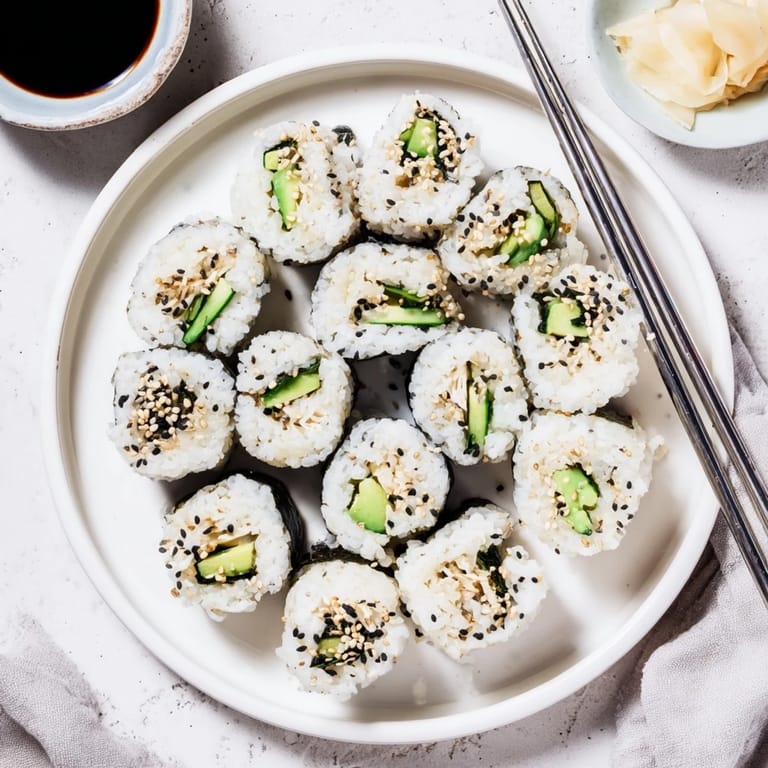
 These rolls became my go-to for solo dinner experiments on quiet Sunday evenings. Theres something meditative about the repetitive motion, the way your hands learn the rhythm through practice rather than instructions.
Making Sushi at Home
Restaurant sushi chefs train for years, but home sushi rewards experimentation more than perfection. Your first few rolls might look a bit rustic—thats completely normal and arguably more charming than machine-perfect cylinders. The real joy comes from making something with your hands that tastes exactly how you want it to, whether you add extra avocado or experiment with different fillings like cooked shrimp or spicy tuna.
Rice is Everything
California rolls live or die by the rice quality and preparation. Use actual short-grain sushi rice, not long-grain or jasmine, because the specific starch content creates the essential texture that holds rolls together without falling apart. The seasoning should be subtle, not overwhelming—you want to taste the rice itself, enhanced rather than masked by vinegar and sugar.
Filling Freedom
The classic combination of crab, avocado, and cucumber became iconic for a reason, but once you master the rolling technique, the possibilities open up completely. Try adding thin strips of mango for sweetness, substitute cooked shrimp for crab, or drizzle spicy mayo inside for extra kick. The only rule is that your fillings should be cut into uniform strips so they roll evenly and distribute nicely across each bite.
- Keep a small bowl of water nearby for constantly wetting your hands
- Work quickly once you start rolling to prevent the nori from softening
- Leftovers can be stored wrapped in plastic in the fridge for about 24 hours
 Save to Pinterest
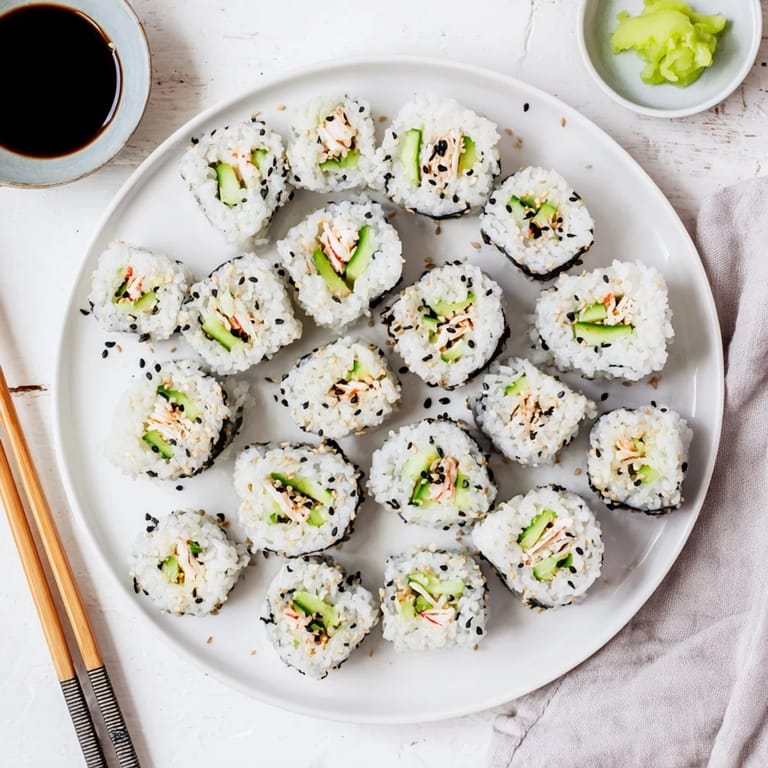
 Homemade sushi feels like an accomplishment every single time, and there is nothing quite like that first bite of something you created with your own hands. Enjoy the process and the product.
Recipe FAQs
- → What makes a California roll different from other sushi?
The California roll is an inside-out maki where rice wraps around the nori seaweed instead of the traditional reverse. This uramaki style was invented in Los Angeles to help diners uncomfortable with eating seaweed. The roll typically contains crab or imitation crab, avocado, and cucumber, often topped with sesame seeds.
- → Can I use real crab instead of imitation crab?
Absolutely. Fresh cooked crabmeat provides superior flavor and texture compared to surimi (imitation crab made from white fish). Lump crab or Dungeness crab work beautifully. If using real crab, simply shred it into small pieces and mix with a touch of mayonnaise to help it hold together in the roll.
- → Why do I need to flip the nori rice-side down?
This inside-out technique creates the characteristic rice exterior. Sprinkling sesame seeds directly onto the rice before flipping adds flavor and visual appeal. The rice layer protects the delicate nori from becoming soggy and provides a pleasant texture contrast against the creamy fillings inside.
- → How do I prevent the rice from sticking to my hands?
Keep a small bowl of water mixed with a splash of rice vinegar nearby. Dip your hands in this mixture before handling sushi rice—the vinegar solution creates a barrier preventing sticking. Shake off excess liquid before spreading rice to avoid making the nori soggy.
- → What's the secret to cutting clean sushi pieces?
Use your sharpest knife and keep it damp with water or a wet cloth between cuts. Use a gentle sawing motion rather than pressing down—this prevents crushing the roll. Wipe the blade clean after each slice. For best results, chill the completed rolls for 10-15 minutes before cutting.
- → Can I make California rolls ahead of time?
California rolls are best enjoyed immediately after preparation when the rice is at room temperature and the avocado is fresh. If you must prepare them in advance, cover tightly with plastic wrap and refrigerate for up to 2 hours. Beyond this, the rice hardens and avocado may oxidize. Prepare all components in advance, then assemble just before serving.