 Save to Pinterest
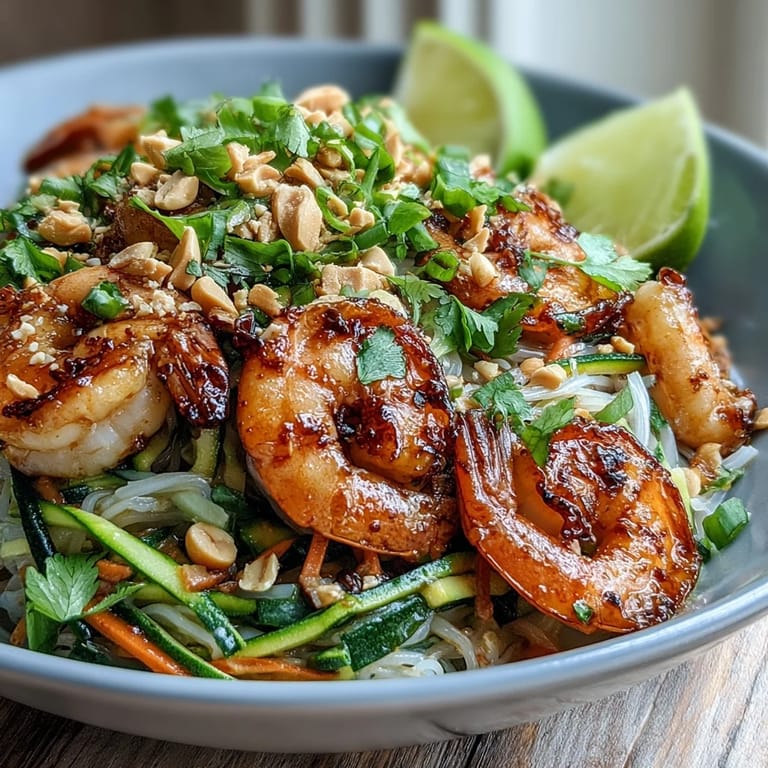
 There's something about the sound of shrimp hitting a hot wok that makes me feel like I'm actually cooking something special, even on a Tuesday night. My neighbor knocked on my door one evening, drawn by the smell of sesame oil and lime, and asked what I was making—it turned out to be this very bowl. The way everything comes together in one pan, bright and alive, reminded me why I keep coming back to Asian fusion cooking.
I made this for my sister after she mentioned craving something fresh but still satisfying, and watching her eat three bowls in a row told me everything. She kept stopping between bites to comment on how the lime cuts through the richness, how the peanuts stay crunchy even after sitting in the sauce—small details that somehow matter more than the dish itself.
Ingredients
- Medium shrimp, peeled and deveined (400 g or 14 oz): They cook fast and absorb the sauce beautifully, but buy them fresh if possible because frozen ones can turn rubbery if you're not careful with timing.
- Rice noodles (200 g or 7 oz): These are forgiving and don't need to be cooked until soft—slightly al dente works better so they don't break apart when you toss everything together.
- Medium zucchini, julienned: The natural sweetness balances the salty sauce, and keeping the pieces thin means they cook in minutes without turning mushy.
- Large carrot, julienned: Raw carrots work here too if you prefer more crunch, but cooking them briefly softens their bite just enough.
- Garlic, minced (2 cloves): Toast it for just 30 seconds so it releases its oils without burning—the difference between fragrant and bitter is literally seconds.
- Green onions, sliced (3): Add them late in cooking to keep them fresh and sharp tasting, since heat mellows their punch.
- Soy sauce (3 tbsp): Use gluten-free tamari if that matters to you, and don't skip the good stuff because this sauce is the main flavor.
- Lime juice (2 tbsp): Fresh lime is non-negotiable—bottled juice tastes flat and tinny by comparison.
- Sesame oil (1 tbsp): A little goes a long way because this ingredient is potent, and drizzling it at the end amplifies its nutty aroma.
- Honey or maple syrup (1 tbsp): This rounds out the flavors and keeps everything from tasting too sharp or salty.
- Chili garlic sauce (1 tsp, optional): Add this if you want heat, but taste as you go because heat builds fast.
- Roasted peanuts, roughly chopped (50 g or 1/3 cup): Buy them unsalted so you control the salt level, and add them right before serving so they stay crunchy.
- Fresh cilantro leaves, roughly chopped (1/3 cup): This herb is the finishing touch that makes everything taste brighter and more alive.
- Lime wedges for serving: Let people squeeze extra lime onto their bowl because the acidity is what makes this dish sing.
Tired of Takeout? 🥡
Get 10 meals you can make faster than delivery arrives. Seriously.
One email. No spam. Unsubscribe anytime.
Instructions
- Cook the noodles ahead:
- Follow the package directions, then rinse them under cold water so they stop cooking and won't clump together later. This simple step saves you from ending up with a gluey mess at the bottom of the wok.
- Whisk your sauce in advance:
- Mix soy sauce, lime juice, sesame oil, honey, and chili garlic sauce in a small bowl and taste it—you want it to be bold and slightly funky, not timid. This way you're not fumbling with bottles over a hot stove.
- Get your pan screaming hot:
- Sauté the garlic until it whispers:
- A large skillet or wok over medium-high heat with just a splash of oil; 30 seconds of garlic time is all you need before the shrimp goes in. You'll smell that moment when it's right—trust your nose over the clock.
- Cook the shrimp until they blush:
- Two to three minutes per side and they're done, turning from gray to pink as a signal that you nailed it. Overcooked shrimp are rubbery and sad, so don't walk away from the stove.
- Vegetables get a quick dance:
- The zucchini and carrot need only 2-3 minutes of stirring over high heat to stay crisp-tender, not floppy. You want them to have a slight resistance when you eat them.
- Bring everything together in the pan:
- Add the cooked noodles, green onions, and sauce to the vegetables and shrimp, then toss everything gently so the sauce coats every strand and bite. The whole thing comes alive when the heat pulls all those flavors together.
- Divide and celebrate:
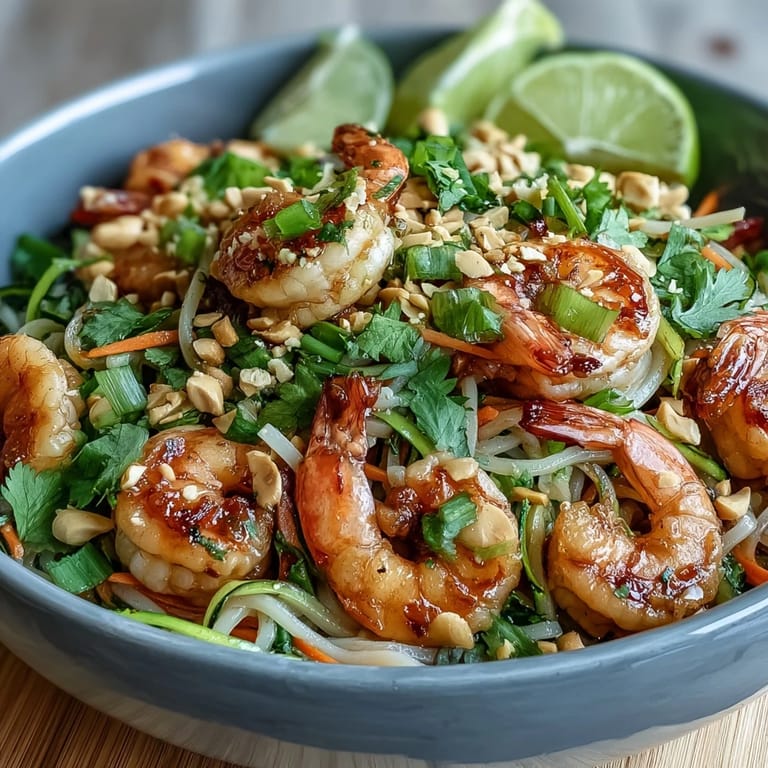
- Split the noodles among four bowls, then scatter peanuts and cilantro over the top right before eating. Fresh herbs and crunchy toppings should hit your tongue at the same time as the warm noodles.
 Save to Pinterest
 The first time I served this to someone who usually plays it safe with food, they asked for the recipe before they finished eating. That moment reminded me that simple, well-balanced dishes sometimes hit harder than anything complicated.
Why This Sauce Works
The magic lives in the balance—soy sauce brings salt and depth, lime brings brightness and acid, sesame oil brings richness and nutty aroma, and honey brings a subtle sweetness that ties it all together. It's the kind of sauce that tastes like you spent hours building layers, when really you spent two minutes whisking. Once you understand this formula, you can adjust it based on what you're feeling: more lime if you want tang, more honey if you want comfort, more chili if you want edge.
Protein Flexibility
Shrimp works beautifully here, but don't feel locked into it—chicken breast cut thin cooks in about the same time, tofu can go in for a vegetarian spin, and even leftover rotisserie chicken shredded works when you're truly short on time. The key is that whatever protein you choose gets coated in that sauce at the end, so it drinks in all those flavors rather than standing alone.
Vegetable Variations and Toppings
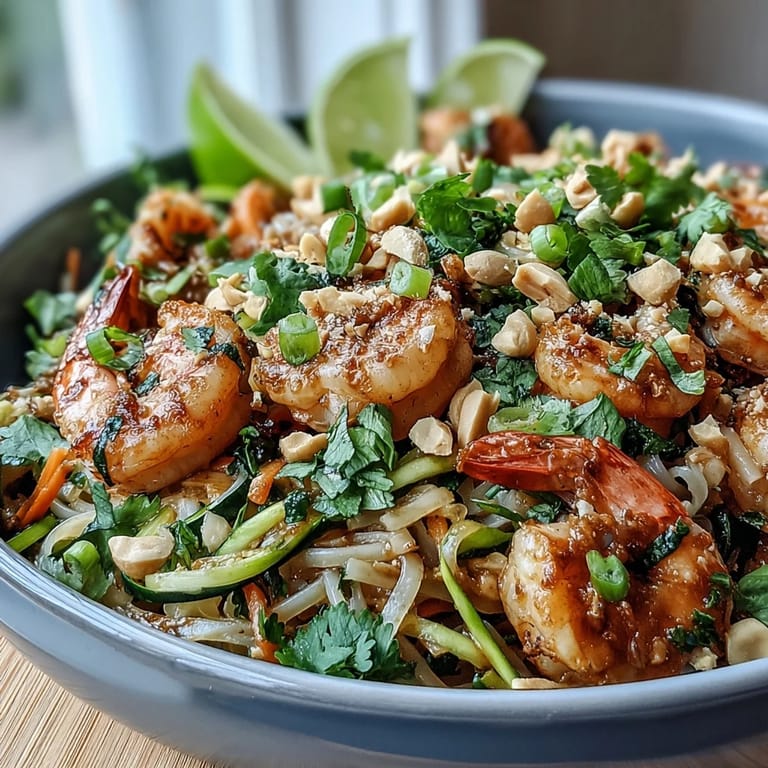
Summer is when I pile in snap peas and red bell pepper, while cooler months call for bok choy or even thin broccoli florets—whatever is at the market speaking to you. Beyond peanuts and cilantro, I've topped these bowls with crushed cashews, toasted sesame seeds for nut-free tables, crispy fried shallots, or fresh basil when I'm feeling Italian-Asian fusion energy. The noodles are your canvas, so play with what you love.
- Toast your own peanuts if you have time because they taste infinitely better than pre-roasted.
- Keep lime wedges on the table because people love adjusting the brightness themselves.
- Chop your herbs fresh right before eating, not hours ahead, so they stay perky and alive.
 Save to Pinterest
 This bowl has become my go-to when I want to feel like I'm cooking something vibrant and intentional, without losing my mind to complexity. It's the kind of meal that tastes like care even when you're moving fast.
Recipe FAQs
- → Can I make this noodle bowl ahead of time?
The sauce can be prepared up to 3 days in advance and stored in the refrigerator. Vegetables can be julienned a day ahead, but cook the noodles and shrimp just before serving for the best texture and freshness.
- → What other proteins work well in this bowl?
Sliced chicken breast, cubed tofu, or even edamame make excellent substitutions. Adjust cooking times accordingly—chicken needs about 5-6 minutes, while tofu only requires 2-3 minutes to brown and heat through.
- → How do I prevent rice noodles from sticking together?
Rinse the cooked noodles thoroughly under cold water after draining to remove excess starch. Toss them with a teaspoon of sesame oil before setting aside. This keeps them separate until ready to combine with the sauce.
- → Can I make this dish gluten-free?
Absolutely. Use gluten-free soy sauce or tamari in the sauce and verify your rice noodles are certified gluten-free. Most rice noodles are naturally gluten-free, but cross-contamination can occur during processing.
- → What vegetables can I add for more variety?
Snap peas, bell peppers, broccoli florets, or baby corn work beautifully. Add harder vegetables like broccoli first, giving them 2-3 minutes before adding quicker-cooking options like snap peas.