 Save to Pinterest
 My neighbor brought over a container of this soup on a rainy Tuesday, and I remember being struck by how the steam rising from the bowl seemed to carry the entire story of the dish—ginger, garlic, and something delicate underneath. I tasted it slowly, noting how the silken tofu practically melted on my tongue, and I knew I had to learn how to make it myself. What started as a simple afternoon in her kitchen became my go-to comfort when I needed something nourishing but not heavy.
I made this for my sister after she mentioned feeling under the weather, and watching her face soften as she took that first spoonful reminded me why simple food matters. She had thirds, which never happens, and later told me it was exactly what she needed—not just the nutrition, but the feeling that someone understood what would help. That's when I realized this soup isn't just about flavor or technique; it's about showing up for people.
Ingredients
- Low-sodium vegetable broth (1.5 liters): The foundation of everything, so choose one you'd actually drink on its own—it makes all the difference in the final bowl.
- Soy sauce or tamari (2 tablespoons): Use tamari if you need gluten-free, and remember it's slightly saltier, so taste as you go.
- Fresh ginger, thinly sliced (1 tablespoon): Slicing instead of mincing releases the ginger's warming oils more gently into the broth without overwhelming it.
- Garlic, minced (2 cloves): Mince it fine so it distributes evenly and mellows into the broth rather than lingering in sharp pieces.
- Sesame oil (1 teaspoon): This is the secret bloomer—it wakes up the entire soup, so don't skip it or substitute with regular oil.
- Carrot, julienned (1 medium): Cut them thin so they cook quickly and stay slightly crisp rather than becoming mushy.
- Shiitake mushrooms, sliced (100 g): These add an earthy depth that makes the soup feel substantial without any meat.
- Baby bok choy, chopped (100 g): Add it near the end so it keeps its tender green color and slight crunch.
- Red bell pepper, thinly sliced (1 small): The sweetness balances the savory notes beautifully.
- Spring onions, sliced (2): Reserve some green parts for garnish to add freshness right before serving.
- Silken tofu, cubed (300 g): Handle it gently—these cubes are delicate, almost fragile, which is exactly why this soup works so well with them.
- Fresh cilantro leaves, sesame seeds, and lime wedges (optional garnishes): These aren't just extras; they transform the bowl from simple to complete.
Tired of Takeout? 🥡
Get 10 meals you can make faster than delivery arrives. Seriously.
One email. No spam. Unsubscribe anytime.
Instructions
- Wake up the aromatics:
- Heat sesame oil in your pot over medium heat and let the garlic and ginger sizzle for a minute or two until your kitchen smells like a street market. You'll know it's ready when the fragrance hits you gently, not aggressively.
- Build the broth base:
- Pour in the vegetable broth and soy sauce, then let it come to a gentle simmer—you want lazy bubbles, not a rolling boil. This is where patience becomes an ingredient.
- Start the heartier vegetables:
- Add the carrots, mushrooms, and bell pepper, giving them five minutes to soften just enough that a fork would meet resistance but not defeat. The goal is tender-crisp, not tender-sad.
- Add the delicate greens:
- Toss in the bok choy and spring onions for two to three minutes, watching as they brighten and soften. This is the moment the soup shifts from warm to vibrant.
- Introduce the tofu gently:
- Carefully lower the tofu cubes into the broth and let them warm through for about two minutes without stirring too much—they're fragile, like trust. Every gentle movement keeps them intact.
- Taste and adjust:
- Take a spoonful and think about what you taste. If it needs more depth, add a splash more soy sauce and let it mingle for a minute.
- Finish and serve:
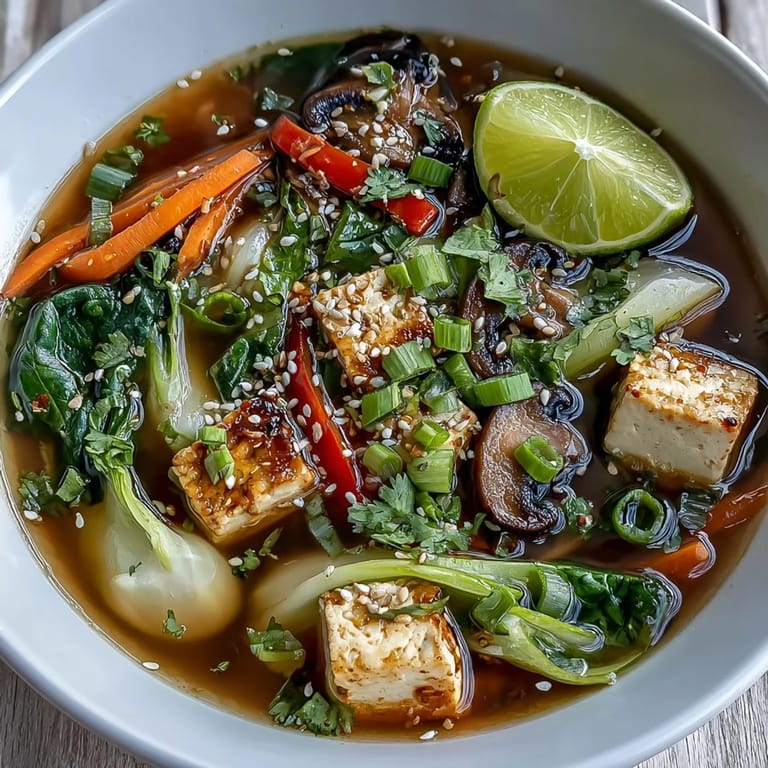
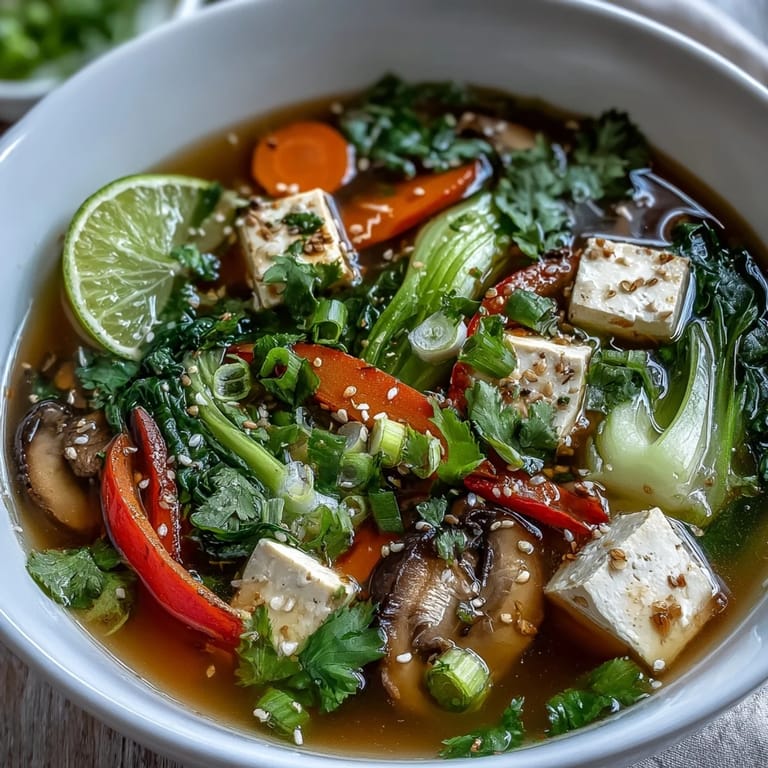
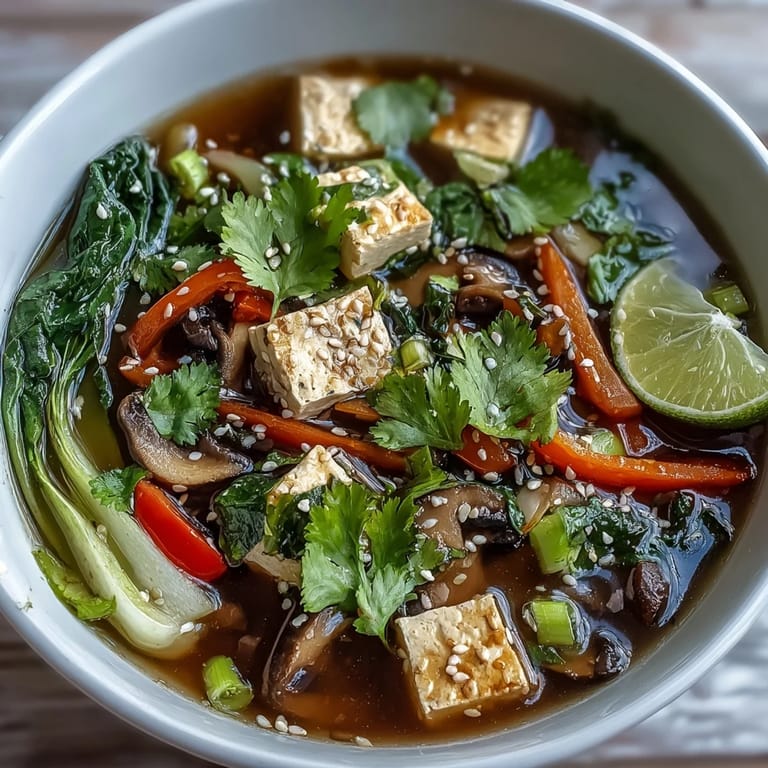
- Ladle into bowls and crown each one with cilantro, sesame seeds, and a lime wedge if you're feeling generous. Serve immediately while everything is still steaming.
 Save to Pinterest
 I made this soup for a dinner party once where half the guests were vegetarian and half were not, and it became the dish everyone asked about. Watching people from different worlds find common ground over a single bowl felt like small magic—the kind that happens in kitchens more often than we notice.
Variations Worth Trying
The beauty of this soup is its flexibility—I've added snow peas for crunch, napa cabbage for volume, and enoki mushrooms when I wanted something lighter and more delicate. Once I stirred in a touch of miso paste at the end for deeper umami, and another time I added a whisper of chili oil for people who needed heat. Think of the base recipe as a canvas rather than a prescription.
Texture and Temperature Matter
The contrast between the silken tofu and the slight resistance of the vegetables is what makes this soup interesting rather than one-note. I learned this when I once overcooked everything into submission and ended up with soup that tasted fine but felt monotonous. Now I time the additions carefully so each component still has its own presence.
Serving and Storage Wisdom
This soup is best served immediately after assembly, while the tofu is still pillowy and the vegetables still have their character. If you must make it ahead, keep the broth separate and warm the tofu gently just before serving to avoid that unfortunate rubbery texture that develops when it sits too long.
- Refrigerate leftovers in an airtight container for up to three days, though the tofu will soften and the broth will deepen in flavor.
- Freeze just the broth and vegetables, then add fresh tofu and garnishes when reheating to keep everything tasting vibrant.
- Reheat gently over medium heat rather than microwave, stirring occasionally so nothing scorches on the bottom.
 Save to Pinterest
 This soup has become my answer to so many moments—exhaustion, celebration, illness, or just a quiet evening at home. It asks very little of you and gives back everything.
Recipe FAQs
- → What type of tofu works best?
Silken tofu is ideal for this soup due to its delicate, creamy texture that absorbs the savory broth beautifully. However, firm tofu can be substituted if you prefer more substantial cubes that hold their shape better during cooking.
- → Can I make this soup spicy?
Absolutely. Stir in a dash of chili oil or add sliced fresh chilies during the final minutes of cooking. Sriracha or chili garlic paste also works well as a tableside condiment for those who want to customize their heat level.
- → How long does this soup keep?
The soup will store well in an airtight container in the refrigerator for up to 3 days. However, the tofu may become softer over time. For best results, store the broth and vegetables separately from the tofu, then combine when reheating.
- → Can I freeze this soup?
Freezing is not recommended as silken tofu's texture changes significantly when frozen and thawed, becoming grainy and less appealing. If you plan to freeze, omit the tofu and add fresh cubes when reheating the soup.
- → What vegetables can I substitute?
Snow peas, napa cabbage, enoki mushrooms, spinach, or sliced bamboo shoots make excellent additions or substitutions. The soup is versatile, so feel free to use whatever fresh vegetables you have on hand.