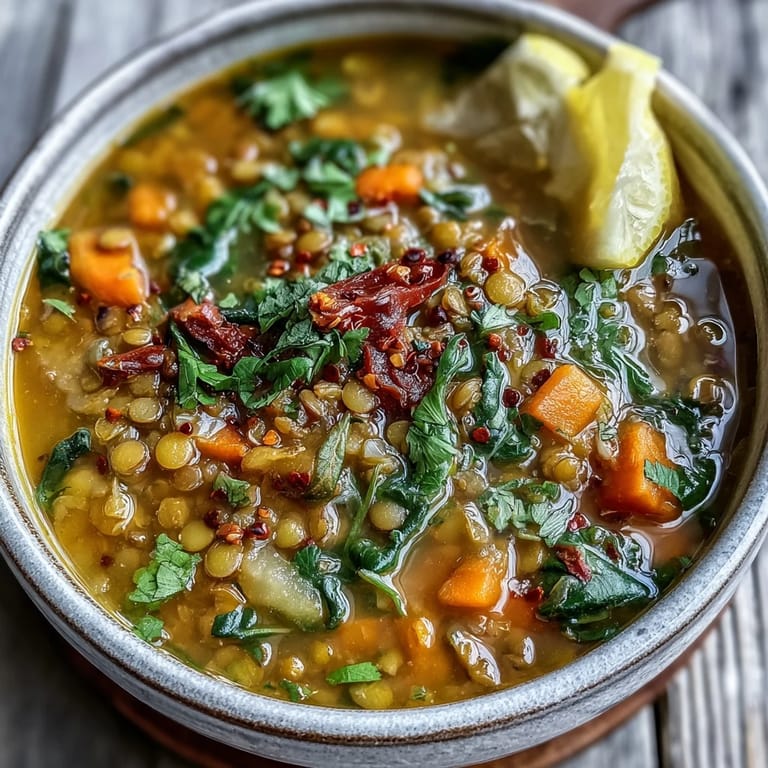
 Save to Pinterest
 There was a season when I couldn't shake a cold, and my neighbor—who grew up in Delhi—showed up at my door with a pot of mung bean soup still steaming from her kitchen. She didn't say much, just left it on my counter with a knowing smile. That first spoonful changed everything: the way the beans melted on my tongue, how the spices seemed to know exactly what my body needed. I've been making this soup ever since, chasing that same feeling of being cared for in a bowl.
I made this for my partner on a gray Sunday afternoon, and he went quiet after the first bowl—not in a bad way, just in that peaceful way where food does its job perfectly. We ended up having three helpings each, and he asked me to write down the recipe so he could make it when I'm traveling. That's when I knew I'd found something special.
Ingredients
- Dried mung beans (1 cup, rinsed and soaked 4 hours or overnight): These little golden legumes are the backbone of everything—they need time to soften, so don't skip the soaking step, and always rinse them well before cooking.
- Medium onion (finely chopped): The onion becomes your flavor base, turning sweet and translucent as it hits the heat, so take a moment to chop it fine.
- Garlic (2 cloves, minced) and fresh ginger (1-inch piece, grated): These two are a partnership—the garlic brings sharpness while ginger adds that grounding warmth that makes the soup feel healing.
- Carrot and tomato: The carrot gives gentle sweetness and body, while the tomato brightens everything and helps the broth develop depth as it simmers.
- Green chili (1 small, finely chopped, optional): This is your choice to make—skip it if you prefer mild, add it if you want a quiet heat that builds.
- Ground cumin, coriander, and turmeric (1 tsp, 1 tsp, and 1/2 tsp): Toast these in the pan and you'll unlock their true magic; they're not just flavor, they're the soul of an Indian kitchen.
- Mustard seeds, black pepper, and asafoetida (1/2 tsp, 1/2 tsp, and 1/4 tsp): The mustard seeds will sizzle and pop—that sound and aroma are your signal that everything is beginning.
- Water or vegetable broth (6 cups): Use broth if you want deeper flavor, but plain water works beautifully too and lets the spices shine.
- Fresh cilantro and lemon juice (2 tbsp and 1 tbsp): These finish the soup—cilantro adds brightness, lemon juice brings everything into focus like the final note of a song.
Tired of Takeout? 🥡
Get 10 meals you can make faster than delivery arrives. Seriously.
One email. No spam. Unsubscribe anytime.
Instructions
- Prepare your beans:
- Drain and rinse your soaked mung beans under cold water, watching them roll around in the colander like little golden pebbles ready for their transformation.
- Toast the mustard seeds:
- Heat a splash of oil in your large pot over medium heat, then add the mustard seeds and listen for them to sizzle and pop—this takes about 30 seconds and fills your kitchen with an unmistakable Indian warmth.
- Build your flavor base:
- Add your chopped onion, minced garlic, and grated ginger to the pot, stirring often as they soften and become fragrant, roughly 3 minutes. You'll know it's ready when the onion turns translucent and the raw edge disappears.
- Toast the spices:
- Stir in the carrots, tomato, green chili if using, plus the cumin, coriander, turmeric, black pepper, and asafoetida. Let these cook together for 2 minutes, stirring gently—the spices will deepen in color and the tomato will begin to break down.
- Add the beans and liquid:
- Pour in your soaked mung beans and then add the water or broth, stirring everything together. Bring the whole pot to a boil, then lower the heat and let it simmer uncovered for 35 to 40 minutes.
- Watch for doneness:
- The mung beans are ready when they're completely soft and easy to squash between your fingers—this is also when the broth thickens slightly from the starch released by the beans.
- Season and finish:
- Taste the soup, add your salt, and adjust the spices if needed. Stir in the fresh lemon juice and top with cilantro before serving.
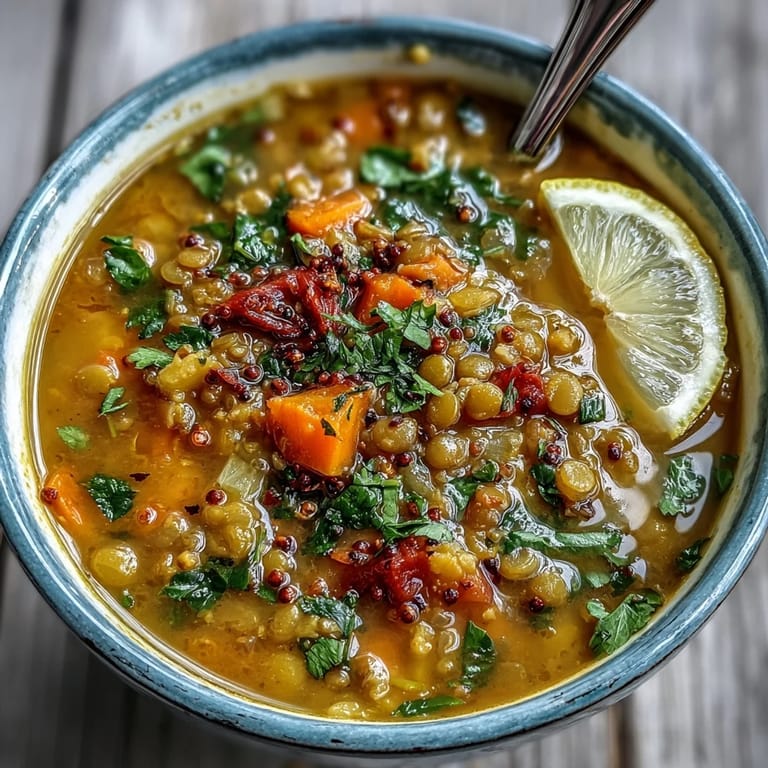 Save to Pinterest
 One morning, I brought this soup to a friend who'd just had surgery, and weeks later she told me she'd made it herself because it had given her such comfort. That's when I realized this soup carries something bigger than nutrition—it carries care, tradition, and the quiet knowledge that sometimes the simplest foods are the most powerful.
The Art of Spice Timing
I used to make this soup by throwing all the spices in at once, and it tasted flat—then I learned that spices need stages. Toasting the mustard seeds first wakes them up, then the warm aromatics in the pan create a foundation for the ground spices, which bloom in that heat before the liquid goes in. It's the difference between a soup that tastes like spices and a soup where spices taste like themselves.
When to Mash and When to Leave Whole
The texture of this soup is entirely up to you, and I've learned there's no wrong choice. Some days I like it brothy with beans that keep their shape, which feels lighter and more vegetable-forward. Other times, especially when someone's sick or when I want maximum creaminess, I use the back of my spoon to gently crush some of the beans right in the pot, creating a thicker, more luxurious consistency without any added cream.
Beyond the Bowl
This soup becomes a different dish depending on what you serve alongside it—rice transforms it into a complete meal, flatbread makes it more casual and handheld, and I've even spooned it over greens for a warm salad. The foundation is always the same, but the story changes each time.
- Leftovers keep for three days in the refrigerator and taste even better the next day as the flavors deepen and marry together.
- You can add a handful of fresh spinach or kale in the last five minutes if you want to sneak in extra greens without changing the flavor profile.
- This soup freezes beautifully for up to three months, so make a double batch and always have comfort on hand.
 Save to Pinterest
 This is the kind of soup that becomes part of your life once you've made it a few times—something you return to when you need nourishment, when you want to feed someone you care about, or simply when the world feels like it could use a little more warmth. Make it once and it becomes yours forever.
Recipe FAQs
- → Do I need to soak mung beans before cooking?
Yes, soaking dried mung beans for 4 hours or overnight helps them cook faster and more evenly. It also reduces cooking time and improves digestibility by breaking down anti-nutrients.
- → Can I make this soup creamy?
Absolutely. For a creamier texture, lightly mash some of the cooked mung beans against the side of the pot with a spoon during the final minutes of simmering. This releases starch and naturally thickens the broth.
- → What can I serve with mung bean soup?
Steamed basmati rice, warm naan, or roti make excellent accompaniments. The soup also pairs beautifully with flatbread for dipping. For a complete meal, add a side of roasted vegetables or a fresh salad.
- → How do I store leftover soup?
Store cooled soup in an airtight container in the refrigerator for up to 4 days. The flavors often deepen overnight. Reheat gently on the stovetop, adding a splash of water if the soup has thickened too much.
- → Can I add other vegetables?
Yes, spinach or kale work wonderfully when added during the last 5 minutes of cooking. You can also include diced potatoes, bell peppers, or zucchini along with the carrots for extra variety and nutrition.