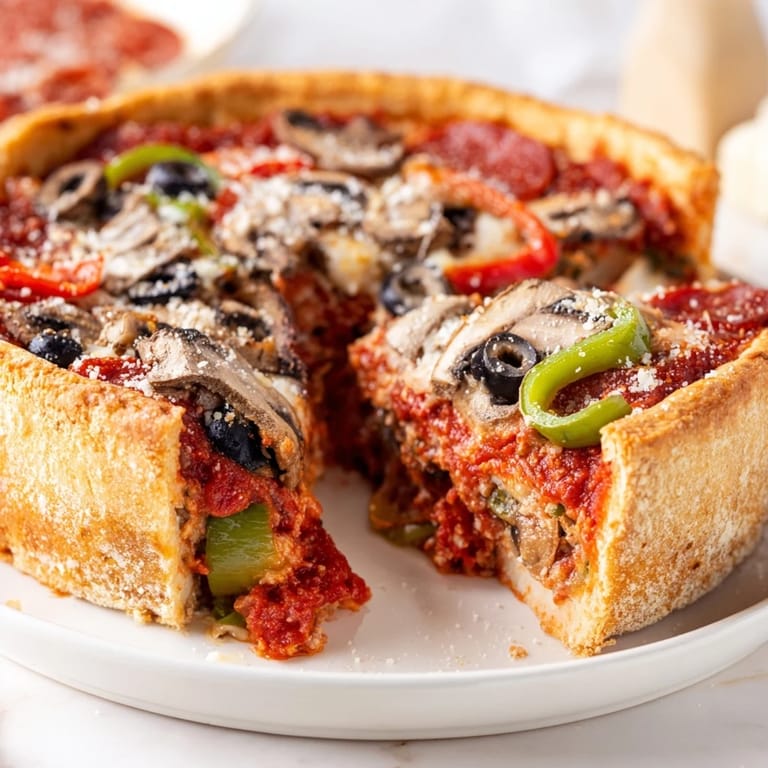
 Save to Pinterest
 The butter hit the hot pan and I knew something magical was happening. I had tried deep dish pizza in restaurants plenty of times, but that first smell of cornmeal and butter merging together in my own kitchen? That changed everything. My roommate wandered in, eyes half-closed, asking what bakery had opened in our apartment at 9 AM.
Snow was falling outside our Chicago apartment window, the kind that makes the city go quiet and muffled. My brother had flown in for the weekend, claiming he needed real deep dish or he was going to consider the visit a complete waste of time. We spent three hours arguing about whether pineapple belonged anywhere near a pizza while the dough rose on the counter, wrapped in a damp towel like a sleeping creature.
Ingredients
- All-purpose flour: The backbone of the dough, giving it structure and substance for those thick, satisfying slices
- Yellow cornmeal: This is what creates that signature golden crunch and adds authentic Chicago texture
- Active dry yeast: The rising agent that transforms water and flour into something living and patient
- Olive oil: Adds moisture and a subtle fruity note that balances the richness of butter
- Unsalted butter: Melted into the dough for that irresistible buttery flavor and tender crumb
- Shredded mozzarella: The cheese that makes everything stretch and pull in those glorious cheese photos
- Grated Parmesan: Sprinkled on top for that final salty, nutty punch that cuts through the sauce
- Crushed tomatoes: Chunky and rustic, exactly what you want sitting on top of all that cheese
- Garlic: Because garlic makes everything better, especially a simple tomato sauce
- Dried oregano and basil: The classic Italian herbs that make the sauce taste like it simmered all day
- Sugar: Just enough to balance the acidity of the tomatoes and bring everything together
Tired of Takeout? 🥡
Get 10 meals you can make faster than delivery arrives. Seriously.
One email. No spam. Unsubscribe anytime.
Instructions
- Wake up the yeast:
- Stir the yeast into warm water and watch for that beautiful foam that tells you it is alive and ready to work its magic.
- Build the dough:
- Mix in the flour, cornmeal, salt, olive oil, and melted butter until everything comes together into a shaggy mass.
- Work it:
- Knead the dough for 5 to 7 minutes until it transforms from sticky to smooth and elastic under your hands.
- Let it rest:
- Place the dough in a greased bowl, cover it, and walk away for an hour while it doubles in size.
- Simmer the sauce:
- Sauté garlic in olive oil until fragrant, then add crushed tomatoes, herbs, sugar, and salt.
- Let it deepen:
- Simmer the sauce for 20 minutes while the dough rises, stirring occasionally and tasting as you go.
- Crank the heat:
- Preheat your oven to 425 degrees Fahrenheit and generously grease a deep dish pan with olive oil.
- Shape the foundation:
- Press the risen dough into the pan, working it up the sides to create those tall, crispy edges.
- Layer it up:
- Sprinkle mozzarella cheese over the dough base, then add your toppings in an even layer.
- Sauce on top:
- Pour the tomato sauce over everything and finish with grated Parmesan scattered across the surface.
- Bake until golden:
- Slide the pan into the oven for 35 to 40 minutes until the crust is browned and the sauce bubbles.
- Practice patience:
- Let the pizza rest for 10 minutes before slicing, or everything will slide right off the crust.
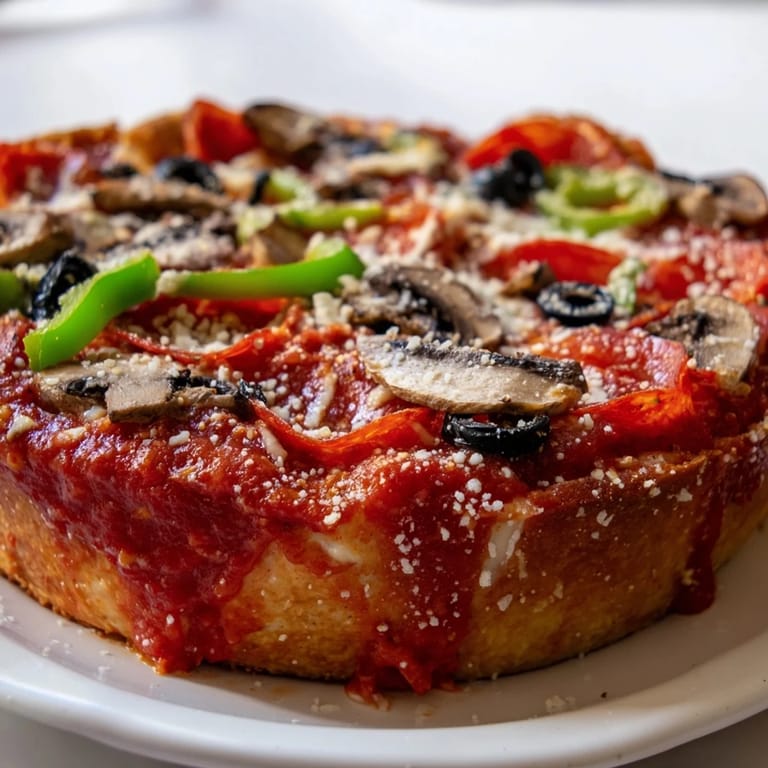 Save to Pinterest
 We pulled that first pizza out of the oven, steam rising in thick ribbons, and just stood there for a minute. The crust was deep golden, the sauce bubbling in little volcanic spots. My brother took one bite and stopped talking about pineapple entirely.
Getting the Crust Right
Pressing the dough into the pan takes confidence and some pressure. Do not worry about making it perfectly even the rustic look is part of the charm. The key is building up the edges because they need to be tall enough to hold all those layers without overflowing in the oven.
Sauce Secrets
Crushed tomatoes are your friend here because they keep their texture even after baking. I have made the mistake of using pureed tomatoes and ended up with something closer to pizza soup. The chunks of tomato give you something to bite into and hold everything together beautifully.
Make It Your Own
The beauty of deep dish pizza is that it welcomes whatever you have in the fridge or whatever your family actually likes. Leftover roasted vegetables from dinner the night before work perfectly here.
- Sauté fresh spinach before adding it so it does not make the crust soggy
- Try a blend of mozzarella and provolone for deeper flavor
- Let the dough rise overnight in the refrigerator for even better taste
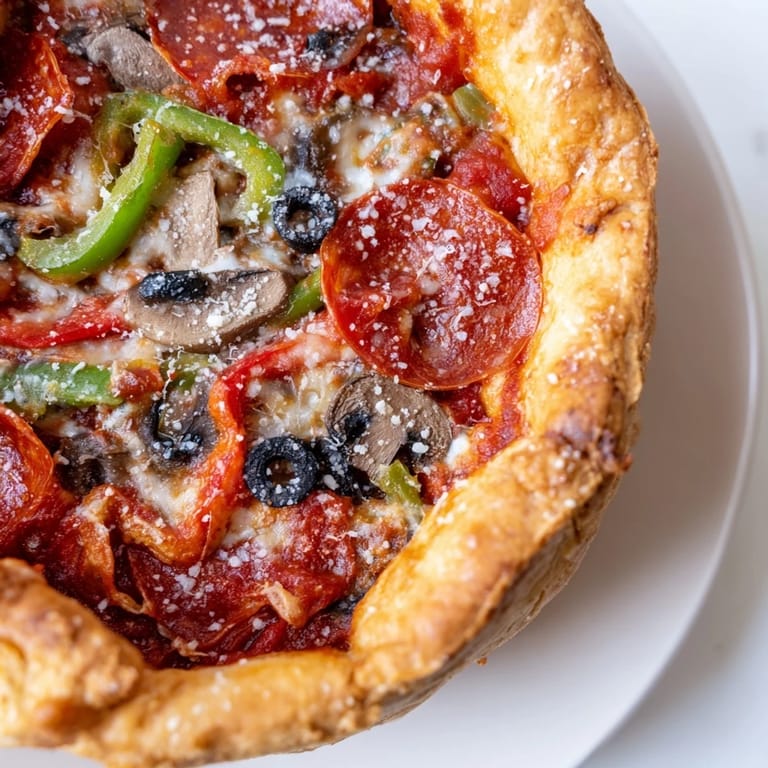 Save to Pinterest
 This pizza has become our snow day tradition, our celebration dinner, the thing that brings people to the kitchen faster than any other smell I have ever created.
Recipe FAQs
- → What makes deep dish pizza different from regular pizza?
Deep dish pizza features a thick, buttery crust pressed up the sides of a deep pan, creating a bowl-like structure. Unlike regular pizza where sauce goes on first, deep dish layers cheese directly on the dough, adds toppings, then finishes with sauce on top. This assembly prevents the crust from becoming soggy and creates distinct layers of flavors throughout every hearty bite.
- → Why does the dough include cornmeal?
Cornmeal adds authentic Chicago texture and a subtle sweetness to the crust. It creates a slightly grainy, crunchy exterior while keeping the interior tender. The cornmeal also helps the dough develop that signature golden color and provides extra structure to support the heavy layers of cheese and toppings without collapsing during baking.
- → Can I use store-bought dough instead of making it from scratch?
Absolutely. Store-bought pizza dough works well for convenience, though you'll miss the cornmeal's distinctive texture and flavor. If using purchased dough, press it into the pan thoroughly and let it rest for 15-20 minutes before adding toppings. This relaxes the gluten and prevents the crust from shrinking back during baking, ensuring you achieve those signature high edges.
- → Why is it important to let the pizza rest before slicing?
Resting for 10 minutes allows the hot cheese and sauce to set slightly, making clean slices possible. Deep dish pizza holds significant moisture from all the layers, and cutting too soon causes everything to slide out. The resting period redistributes heat evenly throughout each layer, ensuring the cheese firms up enough to hold its shape when served.
- → What temperature should the water be for activating the yeast?
The water should be warm to the touch, approximately 110°F (43°C). Water that's too hot (above 115°F) kills the yeast, while water that's too cool (below 105°F) won't properly activate it. Test the temperature on your wrist—it should feel comfortably warm, like bathwater. Proper yeast activation ensures the dough rises properly and develops those characteristic air pockets for a light, tender crust despite its thickness.
- → Can I freeze the dough for later use?
Yes, after the initial rise, punch down the dough, wrap it tightly in plastic, and freeze for up to 3 months. Thaw overnight in the refrigerator before using. Frozen dough may need slightly longer to come to room temperature before pressing into the pan. This make-ahead option is perfect for meal prep or having fresh deep dish ready for busy weeknight dinners.